Thursday, June 10, 2010

Tall Stan - Part 1

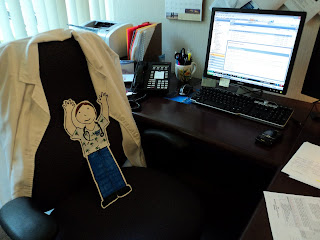
The new AACN theme introduced Tall Stan - this is my Stan sporting palm tree scrubs!


Stand Tall means to recognize the unique and indispensable role nurses play. Recognize it, understand it, articulate it, own it, accept responsibility for it, and celebrate it.
Stand Tall — be proud of what you do.
Stand Tall — speak up.
Stand Tall — together we can do more.
Stand Tall — own the outcomes of your work.
Stand Tall — enjoy what you do.

-AACN

Stan working on evidence-based practices!

Wednesday, June 2, 2010

Nurses, keep talking

Poor communication between healthcare providers including nurses and physicians has been linked to various types of patient safety events. As a patient advocate it is important that nurses ‘speak up’ for their patients and convey critical information accurately and timely. During a typical patient admission, many different units may care for a patient transferring care from one clinical unit to another. Continuity of care depends on the communication of various medical information, plan of care and response to treatments to ensure safe and appropriate care; providing information in a concise manner is important in reducing the risk of errors. Communication problems frequently lead to serious safety events which makes it a high-risk process.

What is good communication? Clear, accurate communication that conveys the patient’s clinical story and ensures the appropriate treatment and care for that patient.

What is meant by hand-off communication? Hand-off is the process of communicating patient information from one care provider to another. Examples include: nurse to nurse shift report, between levels of care, nurses and physicians, care management staff and other care providers, and care providers to patient/family.

Strategies for good communication:
¬ Use clear language – avoid slang terms
¬ Limit interruptions
¬ Standardize routine reports, such as shift to shift or unit to unit, such as SBAR technique
¬ Use tools and technology as available – standardized report tools such as the trip ticket and
Kardex, electronic charting and portable phones
¬ Provide an opportunity for the receiver to ask questions
¬ Repeat back information such as orders or diagnostic results

Keeping patients safe involves more than keeping patients free from physical or
psychological harm but communicating important information in a way that promotes
optimal outcomes.

For more information check out these links:

http://www.nursezone.com/nursing-news-events/more-features/SBAR-Improves-Communication-in-Patient-Handoffs_21756.aspx

http://www.psnet.ahrq.gov/primer.aspx?primerID=9

Sunday, May 30, 2010

Lessons Learned from NTI


As a newbie to AACN’s NTI (American Association of Critical Care Nurses, National Teaching Institute) I did not know what to expect; I certainly did not know how ‘big’ and overwhelming the conference was going to be. And inspiring. I cannot possibly list all the incredible sessions I attended, interesting, intelligent people I met, and information I learned. But I can tell you that being in a room with over 7,000 nurses aspiring to provide the best, safest, quality, evidenced-based care they can was exciting. Sharing success and challenges, heart-wrenching stories and uplifting accomplishments was both invigorating and frustrating. This is what healthcare is supposed to be – nurses committed to caring, compassion and excellence; living it, everyday. Isn’t this why we got into nursing in the first place? Because we care and desire to nurture and heal those who are ill or in need?

One of the highlights of the conference is the AACN president’s message. The current president inspired us and shared how we have “Act[ed] with Intention” as she passed the reigns to the incoming president who unveiled her theme for 2010: “Stand Tall.” So the question is what does it mean to “stand tall” as a nurse and how will I accomplish it? I challenge others as well to think about standing tall: doing the right thing, going the extra mile and striving for excellence. No matter how small the act or the intention, we as individuals can make a difference in each patient’s experience and that alone is cause for standing tall.

Wednesday, May 12, 2010

Building better care

Another interesting article (Physicians must become team players) on providing primary care and the steps it will take to ensure patients are cared for and each provider type fills their niche. And although cliche' it really is about teamwork and working collaboratively and complimentary of one another towards the same goal...quality & cost-effecient patient care.

Saturday, May 8, 2010

Celebrate a nurse

Recently there has been a lot of discussion in the mainstream and healthcare media regarding ‘turf and title wars” between healthcare providers, namely physicians and nurses that has resulted in nurses being painted in a negative light. (Fox News Health Blog) Nurses have been characterized to be less intelligent than physicians, only going to nursing school because they were unable to get into medical school, that physicians are the only providers saving the lives of patients and nurses are merely task-masters and have no role in the recovery and outcomes of patients.

During this time of uncertainty within the healthcare delivery system, I find it incredibly demeaning and inappropriate that instead of looking toward common goals (patient care) that we are bickering about who is smarter, who has more education and who can provide care or perform what skill. Interestingly, the myriad of medical-drama television programs portray physicians frequently performing nursing roles with a disproportionately higher number of physicians to nurses.

There is no doubt that nurses are not content with the current system –an increasingly growing number of sicker patients in the acute care setting with less resources resulting in poor patient outcomes. Impending Medicare cuts (for both primary care and hospitals), an ever changing and evolving healthcare landscape and decreasing numbers of all levels and types of providers; this includes physical therapists, pharmacists and respiratory therapists just to name a few. Shouldn’t we be focusing on the current resources and collaborative practice?

Maybe the discussion we should be having is how can physicians, nurses, advanced practice nurses and all other care services provide safe, efficient, and competent care together?

With so many unknowns related to the healthcare reform bill, it is time to seriously look that the global impact that the changes are going to have on all providers and patients. We are all professionals and deserve to be treated with respect no matter education level or title we have.

It is time for nurses to let their voices be heard and re-educate others about the important role they play in providing safe, quality healthcare.

Happy Nurses Week to the 2 million strong and intelligent nurses across the country.

And remember to say thank you - they might just save your life one day!

Saturday, April 24, 2010

Would you like fries with that?

I recently overheard a conversation in which a patient was berating the nurse for the temperature of the food on his tray and that he could not see outside his room from where he was sitting.

Disclaimer: I am huge patient advocate and in most cases will look at a situation from the patient’s point of view as they are most vulnerable and it is our responsibility as nurses to provide competent care, ensure their safety and preserve their dignity and rights in the process…however in this particular case, the patient was treating the nurse more like a waitress than a professional. The part of the conversation I encountered upon was only a small part of the patient-nurse dynamic that had been transpiring. The tone of voice and demanding attitude towards the nurse were inappropriate and belittling. She felt that everything she did was not good enough and was spending an inordinate amount of time trying to please him, meanwhile getting behind in her medications and patient assessments. This nurse handled herself with great poise and patience, yet he continued to be demanding.

Nurses are not waitresses. Nor are they babysitters or activity directors. Yet, much of a nurse’s shift is spent making sure the patients are happy instead of cared for. I understand that the role of the nurse is multifaceted and must care for the whole patient, however there comes a point when fluffing pillows and entertaining patients interferes with real nurses work – taking care of patients. The quest for patient satisfaction has perhaps swung the pendulum too far. I am sure some would argue that is part of a nurse’s job. I would however challenge that if nursing has truly become no more than providing hospitality services, then why do we expect nurses to be educated, make critical decisions, provide complex care and so much more around the clock?

I think this situation is a symptom of a bigger problem…entitlement. Everywhere people go, the customer is always right, the service must be outstanding, the product must be perfect and if not the right to complain about it is theirs. Healthcare is different and hospitals are not hotels. There is no room for social admissions anymore; beds are tight and resources are short. If you are well enough to notice the food is cold and want to see into the hallway to people watch you are most likely too well to be in the hospital (this a perfect example of healthcare waste) and would be better off going to Burger King where you can have your way.

Saturday, April 3, 2010

It's a new day


and I am back...or at least I hope to be. I cannot believe it has been nearly a year since I last posted to my blog. So much has changed in these past 11 months, but wasn't hasn't changed are my passions: nursing/patient care and coastal living.

Stay tuned as I find my way back to the blogging world!